External networks
Assess agreed internet-facing services, exposed systems and perimeter controls. Identify weaknesses that could create an entry point, while respecting the ownership and restrictions of hosted or third-party infrastructure.

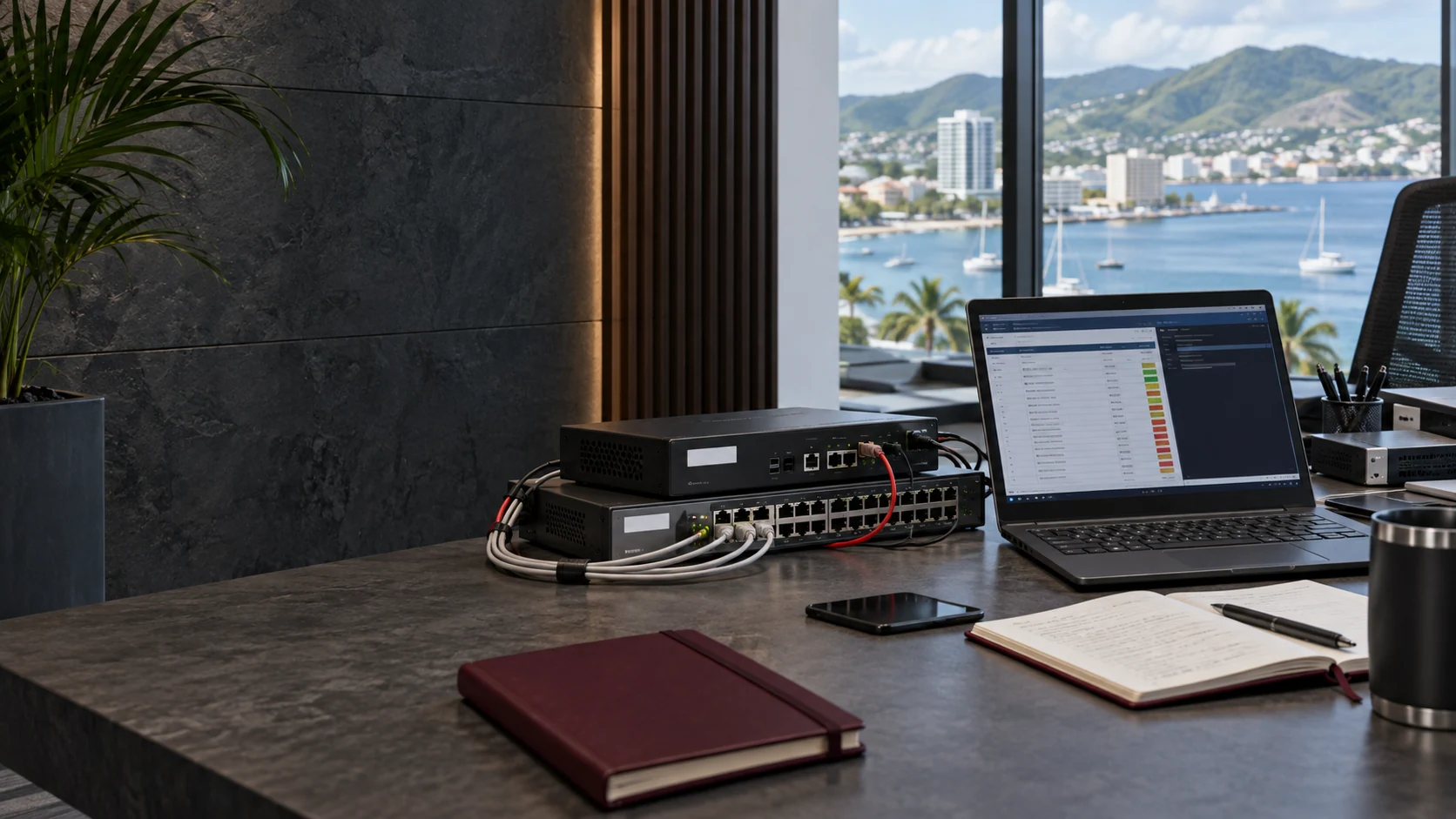
Authorized assessment / British Virgin Islands
Find weaknesses that matter to the business. MicroAntix delivers clearly scoped security testing, prioritized findings and practical guidance for remediation.
Start with a clear brief
A useful assessment begins with questions, not a tool list. Which systems support important services? What can an external party reach? What could an ordinary user access beyond their role? Which recent changes need validation?
We translate those questions into an authorized scope, defined testing approach and reporting expectations. The objective is actionable evidence that helps the organization prioritize improvements, not simply a long list of unverified scanner results.
Assessment scope
Assess agreed internet-facing services, exposed systems and perimeter controls. Identify weaknesses that could create an entry point, while respecting the ownership and restrictions of hosted or third-party infrastructure.
Evaluate the access available from an agreed internal starting point. Review segmentation, permissions and potential movement between systems under controlled conditions, with particular care for production dependencies.
Examine agreed application functions, authentication, authorization and data handling. The scope should identify user roles, test accounts, environments and sensitive workflows so validation reflects how the application is used.
Assess authorized wireless infrastructure, network separation and configuration against the agreed objectives. Physical coverage areas, nearby third-party networks and permitted techniques are explicitly considered.
Review agreed cloud workloads, tenant configuration and identity exposure using the access and permissions provided. Provider policies and the boundary between configuration assessment and active testing are confirmed first.
Mobile applications, social engineering or physical-security exercises require a separate discussion of objectives and permissions. These are not implied by a standard network test and are included only when expressly agreed.
Controlled methodology
Testing combines appropriate automated discovery with analyst review and controlled validation. The depth, information available to the tester and permitted actions depend on the agreed engagement. We document assumptions so readers understand both the findings and the limits of the assessment.
Recognized guidance, including the OWASP Web Security Testing Guide for web assessments and NIST guidance on technical security testing, can inform the approach. The chosen methodology is adapted to the scope rather than presented as a blanket certification.
Confirm targets, system ownership, information access, test accounts, exclusions and reporting expectations. Agree how unexpected risk or a potentially serious finding will be escalated.
Review the agreed attack surface and identify candidate weaknesses. Correlate automated results with configuration, access and business context to reduce misleading or irrelevant findings.
Use permitted techniques to establish whether a weakness is exploitable and what access or impact may be possible. Stop or escalate when agreed limits or operational safety conditions are reached.
Explain the evidence, business implications and recommended actions. Discuss practical remediation priorities with management and technical teams, including dependencies and residual uncertainty.
Where included, revisit specified findings after changes are completed. Record the observed result and identify items that remain unresolved or require further investigation.
Useful deliverables
For decision-makers
An executive summary explains the most important observations in plain language, the services that may be affected and the priorities that deserve attention. It also explains the scope and limitations so the findings are not mistaken for a universal statement about the organization’s security.
For technical teams
Technical findings identify affected in-scope assets, supporting evidence, severity rationale and practical recommendations. Evidence is handled securely and limited to what is necessary to communicate the issue. The debrief helps the responsible teams understand remediation dependencies.
After the assessment
We help distinguish immediate containment needs from planned engineering work. Changes may involve patching, access restrictions, segmentation, application fixes or stronger monitoring. The organization assigns owners and target dates so remediation can be tracked rather than left in a report.
Where helpful, managed detection and response and identity security improvements can support the broader programme. Testing and remediation work remain clearly scoped, with any additional implementation quoted separately.
Responsible testing
The rules of engagement define data handling, permitted actions, communications and stop conditions. Access to sensitive information is minimized, and evidence is shared through agreed channels. Production systems, third-party dependencies and customer-facing services receive particular attention during planning.
A penetration test is a point-in-time assessment. It does not replace routine vulnerability management, secure development, backup, staff awareness or incident readiness, and it does not guarantee regulatory compliance.
Common questions
Clear scope, practical expectations and a service designed around your organization.
A scan identifies potential weaknesses using automated checks. A penetration test adds scoped, authorized investigation and controlled validation to assess whether weaknesses can be used and what business impact may follow. Scanning may be one part of the assessment, not the whole service.
Yes. Testing begins only after written authorization, target scope, timing, exclusions, contacts and rules of engagement are agreed. Third-party systems, cloud providers and externally owned assets may require additional permission or policy review.
The assessment is planned to reduce disruption, with approved techniques, maintenance windows where appropriate, escalation contacts and stop conditions. Testing cannot be described as risk-free, and destructive or denial-of-service testing is excluded unless separately and explicitly authorized.
The agreed deliverables normally include an executive summary, technical findings with supporting evidence, risk prioritization, remediation recommendations and a debrief. Any retesting, additional reporting format or compliance-specific mapping is defined in the proposal.
Yes. A defined retest can check the relevant original findings after remediation and document whether they are resolved or remain open. Retesting is not automatically a new full assessment, so the scope and time window are agreed separately.
No. An assessment reflects the authorized scope, methods and conditions at a point in time. It cannot guarantee that every weakness has been discovered or that a future change will remain secure. Findings should feed an ongoing security improvement process.
British Virgin Islands
Financial and professional services, hospitality operators, retailers and other BVI organizations rely on interconnected systems and outside providers. MicroAntix helps define an assessment that reflects those dependencies, including remote users, business-critical applications and the practical limits of testing a live environment.
MicroAntix coordinates discovery, implementation and ongoing assistance around your operating hours, site access and agreed support arrangements. For multi-island work, travel, equipment availability, connectivity and maintenance windows are addressed in the project plan.
Plan your next step
Share your objectives, systems and constraints. We will help establish an authorized scope, appropriate testing approach and useful reporting deliverables.
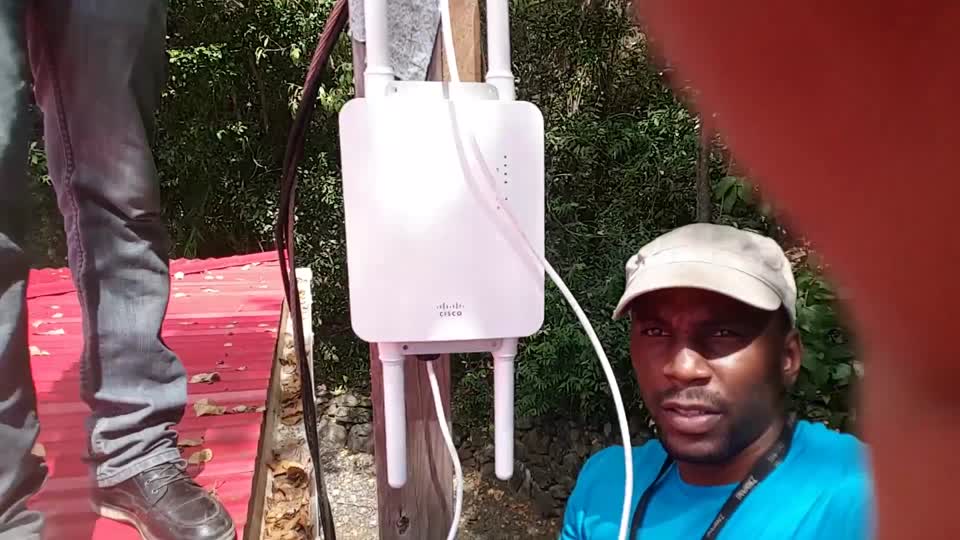
Local expertise / Delivery perspective
Explore the wider MicroAntix team through public fieldwork videos. Testing activity, findings and sensitive client environments are not presented in this collection.
Get to know MicroAntix beyond testingCopyright © 2026 MicroAntix. Designed and Developed by MeeraTek Infosoft