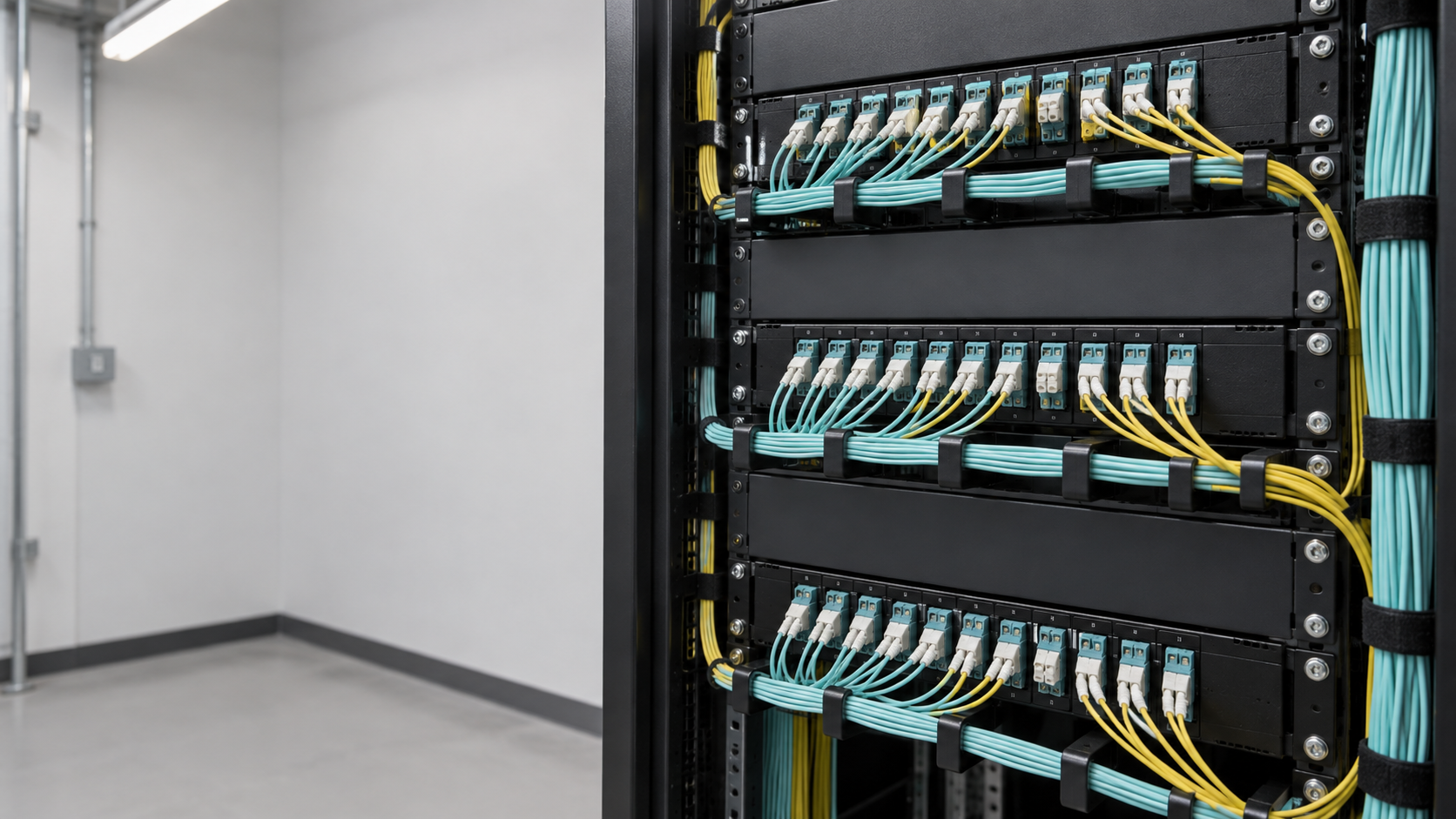
Illustrative fiber distribution rack with organized single-mode and multi-mode patch cables

MicroAntix Networks / Infrastructure services

Fiber Optic
Cabling & Repair

Single-mode & Multi-mode

Precision installation. Practical repair. A dependable backbone for business connectivity across the British Virgin Islands.

The connection that everything depends on

Built for the network.
Planned for the property.

Reliable connectivity starts with the physical infrastructure. MicroAntix designs, installs, tests and repairs fiber links for commercial buildings, resorts, villas, healthcare facilities and multi-building environments in the BVI.

We consider the cable route, environmental exposure, equipment compatibility and operational priorities together. The result is a practical plan for your current requirements and future network changes.

Capacity that fits

Fiber and optics selected for the required network speed.

Site-to-site reach

Backbone links planned around actual routes and distances.

Resilient pathways

Protection, containment and environmental conditions considered.

Verified connections

Testing, labeling and records that support ongoing maintenance.

End-to-end fiber services

From the first survey
to the final connection.

New infrastructure, an expansion or a damaged link: the scope is shaped around the condition of your network and the needs of your operation.

Network design & planning

Translate your bandwidth, distance and availability requirements into a coordinated fiber plan.

Service details
  • Site surveys, existing infrastructure reviews and cable-route planning.
  • Single-mode or multi-mode selection, fiber counts and connector requirements.
  • Pathway, containment and environmental planning for humidity, weather and salt exposure.

Outdoor, underground or specialist routes are assessed individually, including access, civil works and any required approvals.
Professional installation

Install fiber infrastructure with attention to cable protection, routing and serviceability.

Service details
  • Controlled cable pulling with attention to manufacturer limits and bend radius.
  • Routing through appropriate conduits, pathways and containment systems.
  • Rack, patch-panel and enclosure organization for clear, accessible connections.

Installation activities are coordinated with the property team, other contractors and the agreed project schedule.

Fusion splicing & termination

Prepare, join and terminate fiber connections for dependable backbone and distribution links.

Service details
  • Fiber preparation, fusion splicing and protected splice management.
  • Connector and termination planning, including LC, SC, ST and MTP/MPO where specified.
  • Organized splice trays, pigtails and patching for maintainable installations.

Connector type, polish, polarity and the installed fiber must be compatible with the selected equipment and link design.

Testing & certification

Assess installed links and document the measurements needed to evaluate performance.

Service details
  • Optical loss testing using a light source and power meter.
  • OTDR assessment for link events, distance and fault investigation where appropriate.
  • Polarity, labeling and test-result checks against the agreed project criteria.

Test records support handover and future troubleshooting. The test method and acceptance criteria are defined for the installation.

Troubleshooting & repair

Find the cause of an unreliable or failed fiber link and plan a targeted restoration.

Service details
  • Investigation of cable breaks, excessive loss and damaged or contaminated connectors.
  • Fault-location testing, connector inspection and cleaning.
  • Re-splicing, re-termination or cable-section replacement as the condition requires.

The repaired link is retested before handover. Access, damage and replacement materials determine the repair approach and timing.

Upgrades & migrations

Adapt an existing fiber environment as your applications, buildings and network capacity evolve.

Service details
  • Review of existing fiber types, available strands and active equipment.
  • Planning for multi-mode upgrades or a transition to single-mode where appropriate.
  • Integration with copper networks and coordinated equipment cutovers.

We align the physical infrastructure and compatible optics, with a migration sequence designed around operational disruption.

The right fiber for the link

Single-mode or multi-mode?
Start with the application.

Distance, required speed, compatible optics and your existing cabling matter more than choosing a fiber type in isolation.

Longer-reach infrastructure

Single-mode fiber

A common choice for longer links, campus backbones and infrastructure where the optical design calls for single-mode operation.

Plan a single-mode installation
Where it fits
Building-to-building routes, extended property networks and backbone connections.
What we assess
Link distance, optical loss budget, connector compatibility and the required transceivers.
Planning priority
Match the cable, optics and network equipment as a complete link, with appropriate protection and spare capacity.

Premises and equipment connections

Multi-mode fiber

A widely used option for shorter premises links and equipment interconnections where the fiber grade and optics support the required application.

Review a multi-mode network
Where it fits
Server rooms, building risers and shorter links within a property or facility.
What we assess
The installed OM fiber grade, cable condition, route length and supported equipment.
Planning priority
Check application distance limits before reusing existing cabling or moving to a higher network speed.

Achievable speed and distance depend on the complete link, not the cable alone. Fiber basics from the Fiber Optic Association

MicroAntix in the field

Real work. Local delivery.

See MicroAntix at work on a fiber installation in the British Virgin Islands.

MicroAntix fiber installationOn-site in the BVI

Planning around the island environment

Infrastructure work starts with understanding the site.

Property access, cable pathways and working conditions affect how an installation is delivered. We coordinate the physical work with the people responsible for the property and its day-to-day operation.

  • Route planning around existing buildings and services.
  • Protection suitable for the installation environment.
  • Coordinated access and scheduled work areas.
  • Clear handover information for future support.
Explore our project portfolio

BICSI-qualified cabling professionals.

Our team holds BICSI Installer 1, Installer 2 Copper, Installer 2 Optical Fiber and Technician credentials, supporting disciplined installation, termination, testing and troubleshooting.

BICSI Installer 1 credential badge
Installer 1
BICSI Installer 2: Copper credential badge
Installer 2: Copper
BICSI Installer 2: Optical Fiber credential badge
Installer 2: Optical Fiber
BICSI Technician (TECH) credential badge
Technician (TECH)

A disciplined delivery process

Clarity from assessment to handover.

  1. 01

    Assess the requirement

    Review the site, operational need, existing links and any reported faults.

  2. 02

    Agree the approach

    Define routes, materials, test requirements, access and the work sequence.

  3. 03

    Install or restore

    Complete the agreed cabling, splicing, termination or repair activities.

  4. 04

    Test and hand over

    Review results, identify connections and provide the agreed project records.

Common questions

Before you begin.

Talk to us about the property, the equipment and the connection you need.

+1 284 494 3962
Can an existing fiber cable be repaired?

Often, a damaged section or connection can be repaired through re-splicing, re-termination or replacement of a cable section. The right decision depends on the damage, available cable length, route access and the condition of the rest of the link. We inspect and test before recommending a repair approach.

Which fiber type should our business choose?

We assess the distance, required application, existing cabling and compatible network optics. Single-mode and multi-mode both have appropriate uses; neither should be selected solely from a headline speed or a connector’s appearance.

Can fiber be integrated with our existing copper network?

Yes. Fiber can provide backbone connections while copper cabling continues to serve compatible end devices. The design must account for the switches, transceivers or conversion equipment at each end, alongside power, rack space and management requirements.

Do you work across the British Virgin Islands?

MicroAntix supports projects across Tortola, Virgin Gorda, Anegada, Jost Van Dyke and other BVI properties. Scheduling and the proposed scope depend on site access, travel arrangements, material availability and any necessary approvals.

New link. Expansion. Repair.

Let’s connect the next part of your business.

Tell us the site location, the connection you need or the fault you are experiencing. We will help define the next step.

Request a fiber assessment