Homes & private properties
Entry points, occupied areas and selected external approaches, with practical arming routines and access for authorized household members.

MicroAntix / Property protection / BVI
Detect the unexpected.
Keep the right people informed.
Planned alarm systems for homes, commercial premises and managed properties across the British Virgin Islands. From entry-point sensors to personal alerts and remote notifications.
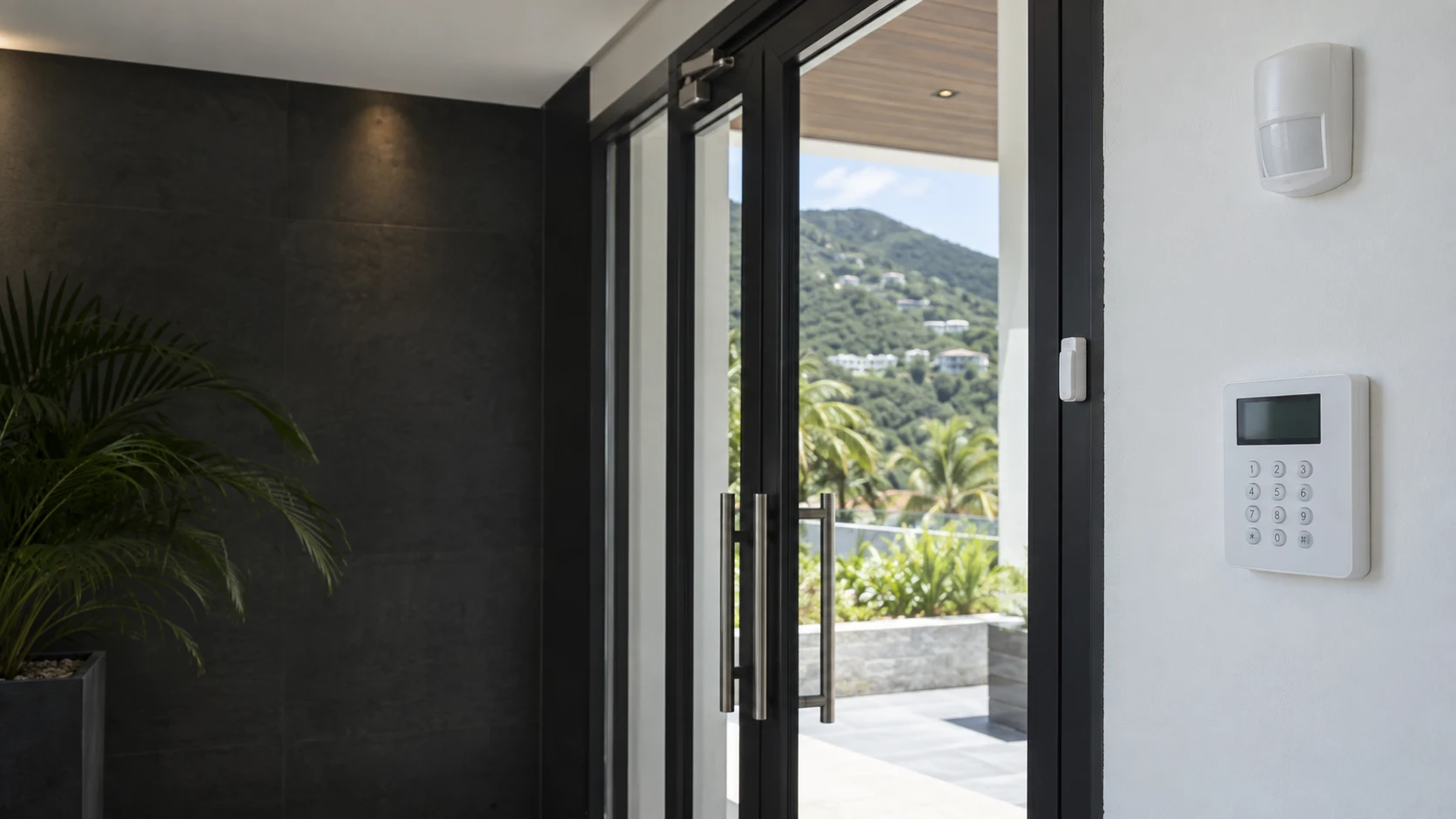
Illustrative installation
Protection begins with a plan
A useful alarm system connects detection, clear zone identification and an agreed response process. MicroAntix helps bring those elements together, with equipment and settings chosen for the building, its users and its operating conditions.
Entry points, occupied areas and selected external approaches, with practical arming routines and access for authorized household members.
Opening and closing routines, controlled user access, staff alert points and named contacts for incidents outside normal operating hours.
Clearly identified zones, caretaker responsibilities and communication arrangements for properties that may be vacant or remotely managed.
Alarm & intrusion services
Combine the services that suit your premises. Equipment compatibility, coverage, communication methods and operating procedures are confirmed as part of the proposal.
10 services
01 / Intrusion detection
An integrated alarm system gives a property a coordinated way to detect selected intrusion events and raise an alert. We plan the control panel, zones, arming methods and notification path around your premises and routines.
02 / Intrusion detection
Contact sensors identify an opening at designated entry points. We assess door and window construction, mounting, cable routes or wireless suitability, then assign zones so authorized users can identify the source of an alarm.
03 / Intrusion detection
Interior motion detectors add coverage within selected rooms and circulation areas. Placement accounts for occupancy, pets, airflow, sunlight and other site conditions that could cause unwanted alarms.
04 / Intrusion detection
Glass-break detection can complement opening contacts where glazing presents an intrusion risk. We check the supported glass types, room acoustics, mounting location and coverage limitations of the selected equipment.
05 / Personal alerts
Fixed or portable panic devices allow authorized users to raise an assistance alert through an agreed system. We discuss who receives the alert, how it is identified and what action the recipient is expected to take.
06 / Personal alerts
Duress functionality provides a discreet alert option where supported by the selected platform. Configuration is planned with the responsible property or business contacts, with careful handling of access and operating procedures.
07 / Intrusion detection
Outdoor detection extends the assessment to selected boundaries, approaches and external areas. We evaluate terrain, vegetation, weather exposure, animals and movement patterns before recommending an appropriate detection method.
08 / Intrusion detection
Beam detection can protect defined paths or openings when a suitable line of sight is available. Installation requires secure mounting, careful alignment and consideration of vegetation, weather and obstructions.
09 / Warnings & notifications
Audible and visible indicators draw attention to an alarm event. We select suitable devices and locations for the intended environment, then configure their behavior with the alarm system and the agreed operating requirements.
10 / Warnings & notifications
Supported systems can send alarm notifications to designated users through the selected app or communication service. We configure recipients, check connectivity and test the notification route, including any subscribed services required.
System design & integration
We assess your existing system, construction, daily activity and communication options before defining the installation. A combination of wired and wireless devices may be appropriate where supported by the chosen platform.
Document the areas to protect, zone names and entry or exit arrangements. Identify coverage limitations, environmental conditions and any areas excluded from the scope.
Review power supplies, compatible standby batteries and available network or cellular communication. Backup duration, subscriptions and outage behavior depend on the selected equipment and service.
Agree who can arm, disarm, administer and receive notifications. Plan account ownership, user changes and secure handover of credentials.
Assess supported integration with security cameras and access control. Integration is confirmed against the actual platforms; it is not assumed that all systems are interchangeable.
From an event to an informed decision
A configured sensor identifies an event within its coverage.
The panel applies the agreed zone and arming configuration.
Supported warning devices or remote channels alert designated users.
The responsible person follows the agreed escalation procedure.
Important: Remote notifications are not the same as a staffed monitoring centre, police dispatch or guaranteed emergency response. Any monitoring arrangement must be separately agreed. Delivery depends on power, connectivity, platform availability and recipient settings.
Assessment to ongoing care
A documented scope helps you understand what is protected, how the system behaves and who to contact when something needs attention.
Review the property, existing equipment and requirements. Agree detection areas, devices, notification recipients and any cabling, power or building work.
Mount and connect the agreed equipment, configure zones and user permissions, and establish supported communication paths.
Test detection, warnings and notifications with authorized contacts. Explain arming, disarming, fault indications and the agreed alert procedure.
Agree ongoing support where required, including battery checks, detector testing, account changes and review after alterations to the property.
Before you begin
Clear requirements and realistic expectations are part of a professional installation.
We can assess its condition, supported devices, available configuration access and manufacturer support. Retention, expansion or replacement depends on what is serviceable and compatible; existing equipment is not assumed to work with a new platform.
Supported platforms may provide remote notifications through their app or communication service. We confirm the available channels, required subscriptions and authorized users, then test the agreed route. Internet or mobile service interruptions can affect delivery.
Outdoor systems must be selected and positioned for the actual environment. Weather exposure, salt air, vegetation, animals and changes around the property can affect reliability. We assess these factors and identify maintenance needs and coverage limitations.
Yes. We can scope panic devices and supported duress functionality as part of the installation. Recipients, response responsibilities and confidential user instruction are agreed before commissioning.
No. An alarm is one part of a property security plan. Detection coverage, correct use, equipment condition, communications and the response arrangements all matter. We explain the intended operation and limitations during handover.
MicroAntix accepts enquiries across Tortola, Virgin Gorda, Anegada, Jost Van Dyke and other British Virgin Islands locations. Site visits, installation logistics and support arrangements are confirmed for each property.
Alarm services / British Virgin Islands
Share your location, property type, existing equipment and the areas of concern. We will help define the next step.

Local expertise / Delivery perspective
Explore our broader fieldwork to understand the property environments in which cabling, equipment and building technology come together.
Explore our property fieldworkCopyright © 2026 MicroAntix. Designed and Developed by MeeraTek Infosoft