A high-performance fiber foundation for Little Thatch Island.
MicroAntix delivered fiber-optic infrastructure + network infrastructure for Little Thatch Island, creating a more reliable, secure and supportable technology environment for operations in the British Virgin Islands.
A technology programme built around Little Thatch Island's operational priorities.
MicroAntix Limited designed and deployed a end-to-end fiber-optic network infrastructure across Little Thatch Island, BVI. Built to power high-demand operations across a private island environment, the new high-performance fiber backbone delivers seamless, high-speed connectivity across remote structures, operational hubs, guest areas, and critical security systems, providing a resilient and future-proof foundation for long-term growth.
For Little Thatch Island, the engagement connected fiber backbone, network and managed Wi-Fi within one delivery plan. MicroAntix considered the existing environment, implementation sequencing, testing, documentation and long-term support so the work would reinforce remote-property logistics, distributed facilities and resilient guest services after handover.
Why Little Thatch Island needed a more dependable fiber backbone approach.
At Little Thatch Island, the existing environment had to support remote-property logistics, distributed facilities and resilient guest services, but limitations across fiber backbone and network made that harder to achieve consistently. Deploying reliable network infrastructure across a private island introduces distinct environmental and logistical demands: Extended Transmission Ranges: Distances between facilities exceed the effective length limits of standard copper Ethernet cabling.
Distance and resilience
Long runs, distributed buildings and environmental exposure required a backbone designed beyond the practical limits of copper cabling. The risk to Little Thatch Island's operations was evaluated through backbone routes, termination points, capacity planning and service access before the solution was specified. This made a measured, supportable response more important than an isolated component replacement.
Network reliability
Core connectivity needed to support users, applications and connected systems without becoming an operational bottleneck. For Little Thatch Island, resolving this required a clear understanding of switching, routing, equipment organization and dependable access to core services, not only replacement equipment. This made a measured, supportable response more important than an isolated component replacement.
Coverage and capacity
Users needed consistent wireless access across the spaces where they worked, stayed, visited or operated. For Little Thatch Island, resolving this required a clear understanding of coverage zones, roaming, device density and real-world use across the property, not only replacement equipment. This made a measured, supportable response more important than an isolated component replacement.
From site requirements to a managed fiber backbone platform for Little Thatch Island.
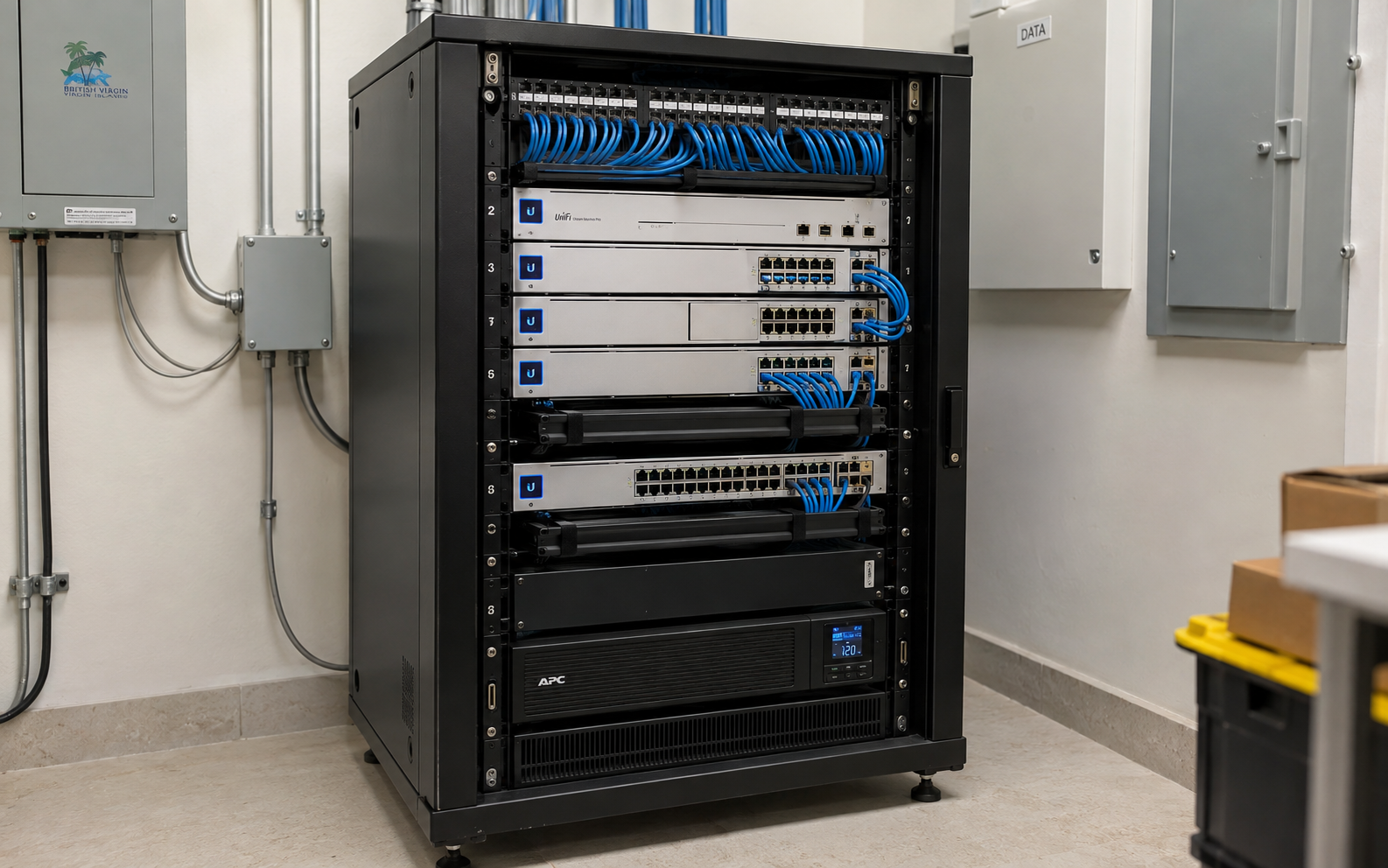
For Little Thatch Island, MicroAntix translated the assessment into a delivery plan centred on fiber backbone and network. MicroAntix executed a complete, end-to-end fiber deployment customized for private island topology: Fiber Routing & Backbone Installation: Deployed ruggedized fiber cables across all primary and secondary routes connecting key island structures. Precision Fusion Splicing & Termination: Executed high-precision terminations and fusion splices to ensure minimal signal attenuation and maximum link reliability. Distribution Infrastructure: Built out organized patch panels, fiber enclosure points, and structured rack environments for optimized cable management and labeling.
Engineer the fiber backbone
MicroAntix planned routes, terminations and distribution points around distance, resilience, service access and future capacity. This gave the Little Thatch Island team a documented approach to backbone routes, termination points, capacity planning and service access.
Build the network foundation
Switching, routing, addressing and equipment configuration were organized into a reliable, supportable environment. The Little Thatch Island deployment accounted for switching, routing, equipment organization and dependable access to core services before final testing and handover.
Design wireless coverage
Access-point placement and configuration were aligned with the property layout, user density and expected device demand. The Little Thatch Island deployment accounted for coverage zones, roaming, device density and real-world use across the property before final testing and handover.
Deploy video surveillance
Camera placement, recording, network connectivity and viewing access were designed around useful coverage and day-to-day operation. For Little Thatch Island, decisions were checked against camera viewpoints, recording coverage, retention and authorized viewing.
From requirements to a supportable technology outcome
Stronger day-to-day technology performance across Little Thatch Island.

Business value: For Little Thatch Island, a resilient island technology foundation supports guest services, administration, security, communications and future property expansion. The combined fiber backbone and network work reduces avoidable operational friction and provides a clearer base for maintenance, support and future investment.
The completed work gives Little Thatch Island a more coherent environment for remote-property logistics, distributed facilities and resilient guest services. The result is not limited to new equipment: users gain a more dependable experience, technical issues can be isolated more methodically, and future changes can be planned from documented foundations rather than improvised around legacy constraints.
Higher-capacity backbone
Fiber provides a scalable foundation for data, wireless, security and other IP-based systems. Within Little Thatch Island's environment, high-capacity connectivity can serve multiple systems and buildings without creating a fragile bottleneck.
Reliable foundation
A structured network provides a stronger base for users, applications and future technology services. At Little Thatch Island, users and connected systems have a more stable foundation for everyday applications and future services.
Stronger connectivity
Improved coverage and capacity support a more consistent experience across the environment. At Little Thatch Island, users can connect more consistently in the areas where work, service and daily activity actually happen.
Better situational awareness
The surveillance environment provides clearer oversight of priority areas and events. For Little Thatch Island, priority areas are easier to review, manage and investigate when an event requires attention.
Planning technology for a private island property?
MicroAntix engineers fiber, networks, Wi-Fi, communications and support models for remote and multi-building properties across the BVI.